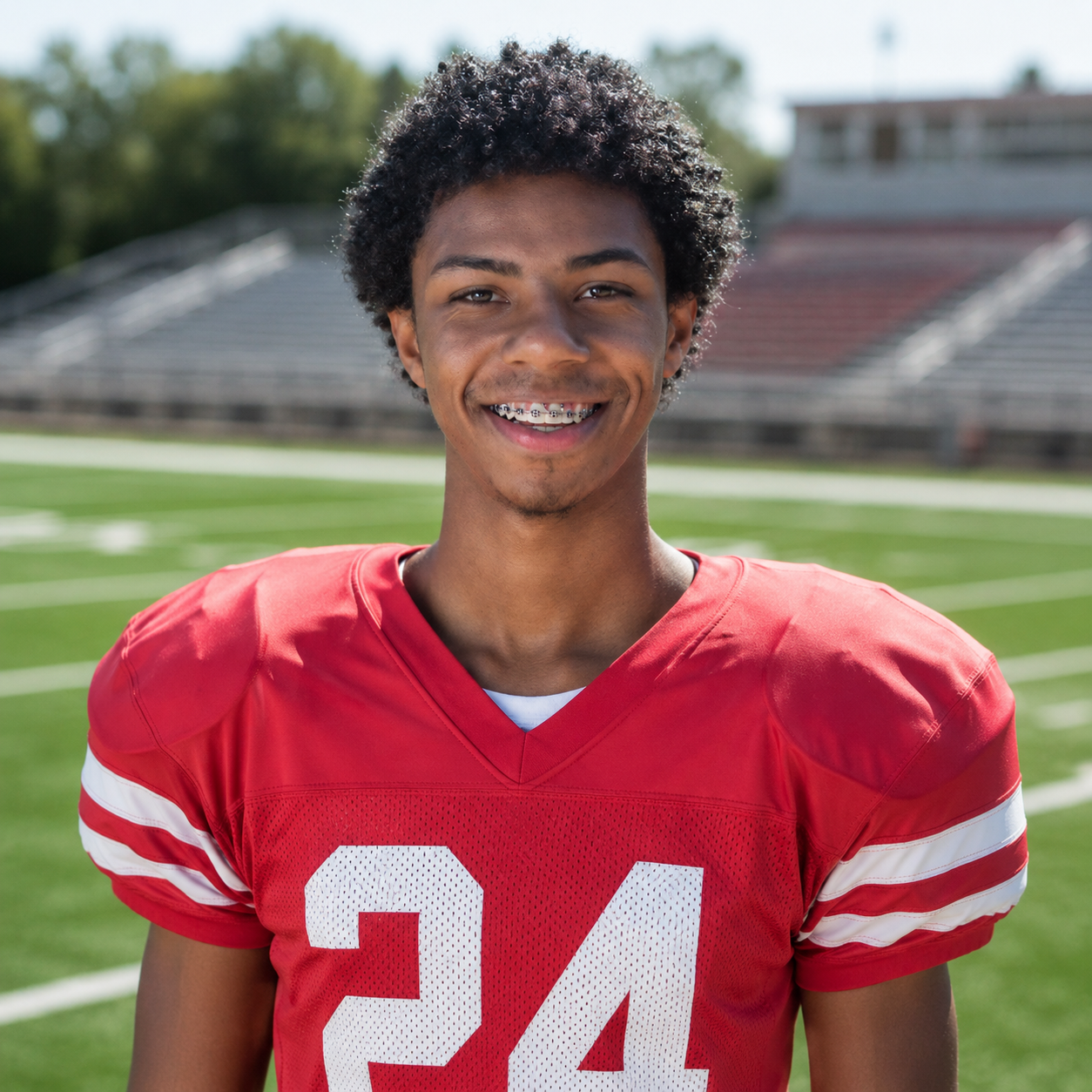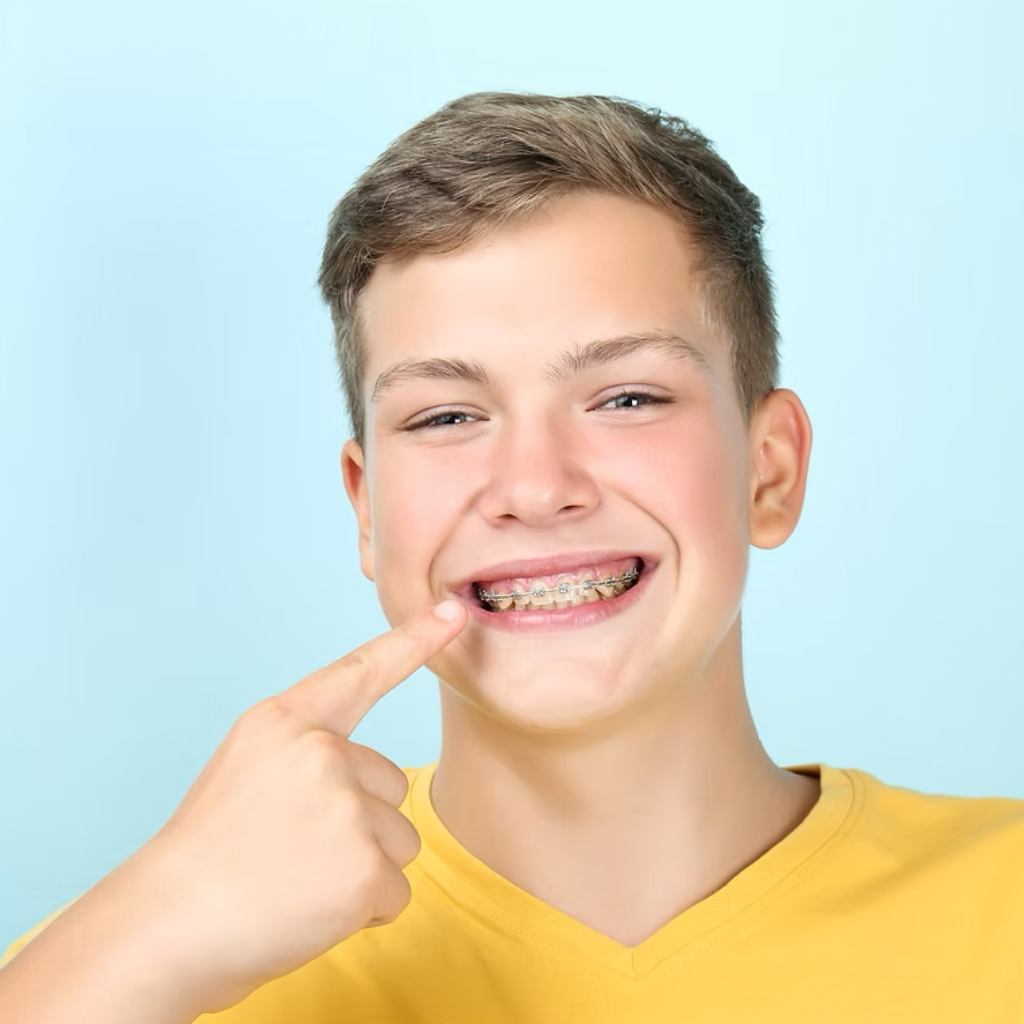


Gluck Orthodontics explains the causes, signs, and treatment options for impacted canine teeth in Nashville.
QUICK ANSWER
An impacted canine is an adult canine tooth, the pointed “eye tooth” at the corner of your smile, that gets stuck under the gum or in the jawbone instead of coming in on its own. Upper canines usually arrive between ages 11 and 12, so a baby canine that hangs on well past then is worth checking. The great news? Impacted canines are very treatable. Depending on where the tooth sits, we may watch it, make room for it, or team up with an oral surgeon to uncover it and gently guide it into place with braces.
KEY TAKEAWAYS
- An impacted canine is a permanent canine that can’t break through the gum on its own. After wisdom teeth, upper canines are the teeth most likely to get stuck.
- Most impacted canines don’t hurt, so they’re usually found on an X-ray or during an orthodontic exam.
- Early detection means more options. The American Association of Orthodontists (AAO) recommends a first orthodontic visit by age 7.
- The most common fix pairs braces with a short procedure, done by an oral surgeon, to uncover the tooth. Research shows the two main surgical methods work about equally well.
- Dr. Jono Gluck and Dr. Joel Gluck keep an eye on developing canines at every Smile Squad visit and build a clear, step-by-step plan when treatment is needed.
Your child’s dentist finishes a routine cleaning and mentions something new. One of the baby canines is still hanging on, and the X-ray shows the adult tooth above it sitting at an unusual angle. The dentist suggests having an orthodontist take a look.
If that moment sent you searching for answers, take a deep breath. “Impacted canine” sounds intimidating, but it’s a problem orthodontists know well, and it has proven, well-studied solutions.
At Gluck Orthodontics, Dr. Jono Gluck and Dr. Joel Gluck have been helping Nashville families for more than 40 years. Here’s what an impacted canine is, why it happens, the signs to watch for, and exactly how treatment works.
What Is an Impacted Canine?
Your canine teeth are the four pointed teeth at the corners of your smile, two on top and two on the bottom. The upper ones are often called “eye teeth.” They have long, strong roots and help guide how your teeth fit together when you bite and chew.
An impacted tooth is a tooth that doesn’t come in the way it should. Instead of breaking through the gum, it stays stuck in the gum tissue or jawbone, or only partly comes in. Wisdom teeth are the most common impacted teeth. Upper canine teeth are next in line.
Tooth eruption is the dental term for a tooth coming in. According to the American Dental Association (ADA), upper canines usually erupt between ages 11 and 12, making them some of the last front teeth to show up. They travel a long way to get there, which gives them more chances to drift off course.
When an upper canine gets stuck, it most often drifts toward the roof of the mouth. Less often, it sits high on the cheek side of the gum, up near the lip.
Why Do Canine Teeth Get Stuck?
There’s rarely just one cause. Research points to a mix of space, guidance, and genetics. Impacted canines also show up about twice as often in girls as in boys. Here are the most common factors:
- Crowding: When the jaw doesn’t have enough room, the canine can get blocked or pushed off its path. Crowding is a leading cause of canines stuck on the cheek side.
- Small or missing side teeth: The lateral incisor next to the canine normally works like a guide rail. When that tooth is small, peg-shaped, or missing, the canine can lose its way.
- Family history: Impacted teeth tend to run in families, so let us know if a parent or sibling had one.
- Something in the way: A baby tooth that stays too long, an extra tooth, or another blockage can sit right in the canine’s path.
What Are the Signs of an Impacted Canine?
Here’s the tricky part: impacted teeth often don’t hurt. The AAO notes that many are discovered during an exam or on an X-ray rather than because of pain. That’s why regular check-ups matter so much.
Signs worth mentioning to your orthodontist include:
- A baby canine that’s still firmly in place as your child heads into the teen years
- An adult canine that came in on one side but not the other
- A gap where a canine should be
- A front tooth next to the canine space that’s tipped, turned, or spaced apart
- A firm bump in the roof of the mouth or high on the gum
- Occasionally, gum tenderness, swelling, or a bad taste near the area
Around ages 9 to 10, an orthodontist can usually feel the developing canine as a small bump in the gum above the baby tooth. When that bump isn’t there, it’s a cue to take a closer look with an X-ray.
Why Does Catching It Early Matter?
An impacted canine isn’t only about appearance. A canine pushing in the wrong direction can press against the roots of the front teeth beside it and slowly wear them away. This is called root resorption, and it usually happens without any symptoms.
The bright side of catching it early is a bigger menu of options. While a child is still growing, we can sometimes make room or remove a baby tooth and give the canine a chance to find its own way. Found later, the tooth usually needs more help.
That’s a big reason the AAO recommends a first orthodontic visit no later than age 7. At Gluck Orthodontics, children who aren’t ready for treatment join Smile Squad, our growth-monitoring program. At each visit, our team tracks baby teeth coming out and adult teeth coming in, with X-rays when needed, so a canine that’s straying off course doesn’t slip by unnoticed.
Curious why we sometimes recommend watching instead of starting right away? Our guides on why your orthodontist may wait to start treatment and the truth about early orthodontic treatment explain more.
Wondering About Your Child’s Canines?
Schedule a complimentary consultation with Gluck Orthodontics. We’ll take a careful look using digital X-rays and 3D imaging and give you clear, honest answers. No dentist referral needed.
Call 615-269-5903| Text 615-269-5903
→ SCHEDULE YOUR CONSULTATIONHow Is an Impacted Canine Treated?
Every impacted canine is a little different. Treatment depends on where the tooth sits, your age, and the health of the surrounding teeth. Here are the main paths Dr. Jono and Dr. Joel may talk through with you.
Watch Closely
If a canine is only slightly off track and a child is still growing, periodic X-rays and monitoring may be the right first step. Sometimes a tooth simply needs a little more time.
Make Room or Remove the Baby Canine
When crowding is part of the problem, braces or an expander can create space and clear the canine’s path. For children around ages 9 to 14, removing the baby canine is another option sometimes used to encourage the adult tooth to come in.
Expose and Bond
This is the most common approach for a canine that won’t come in on its own. It’s a team effort between our office and an oral surgeon:
- Make space. Braces open up room in the arch so the canine has somewhere to go.
- Uncover the tooth. An oral surgeon gently exposes the canine and usually bonds a small attachment to it.
- Guide it home. We use light, steady pressure from the braces to bring the canine slowly into place over several months.
- Finish and protect. Once the canine is lined up, we fine-tune the bite and send you home with retainers to keep everything in place.
When Removing the Canine Makes Sense
Occasionally, a canine sits in a position that’s too risky or too difficult to move. In those cases, removing it and then closing or replacing the space may be the healthier choice. We’ll coordinate with your dentist and oral surgeon and walk you through every option before anything is decided.
| Approach | Often Considered When | What to Expect |
|---|---|---|
| Monitoring | A canine is slightly off course, and the child is still growing | Periodic check-ups and X-rays to track progress |
| Making room or removing the baby canine | Crowding or a lingering baby canine is in the way, usually around ages 9 to 14 | Creating space or a simple extraction, then watching to see if the canine moves |
| Expose and bond | The canine is unlikely to come in on its own | A short procedure with an oral surgeon, then gentle guidance with braces |
| Removal | The canine sits in a risky or unworkable position | Extraction, then closing or replacing the space with your dental team |
How Long Does Impacted Canine Treatment Take?
Guiding a canine into place adds steps, so these cases usually take longer than a simple straightening case. Orthodontic treatment at our office typically runs 12 to 36 months, and impacted canine cases tend to land toward the longer end of that range. Your exact timeline depends on how high the tooth sits and how far off course it is.
You can help keep things moving by wearing elastics as directed, keeping every appointment, and calling us right away if something feels off. Our article on what impacts treatment time breaks it down further.
Can Braces or Aligners Treat an Impacted Canine?
Braces are usually the go-to tool. Brackets give us precise, steady control to bring a stuck tooth down and line it up, which is why most expose-and-bond plans use metal or clear braces.
Aligners can still be part of the conversation. In some cases, Invisalign® may handle part of the alignment once the canine is in a workable spot. As Top 1% Invisalign Diamond Plus Providers, Dr. Jono and Dr. Joel will tell you honestly whether clear aligners are a good fit for your case.
Can Adults Have an Impacted Canine?
Yes! Some adults still have a baby canine that never fell out, or an adult canine that never arrived. A baby canine can last for years, but it may eventually loosen.
Adults can absolutely be treated. Canines are less likely to come in on their own after the growing years, so options usually lean toward exposure and bonding, or removal with a plan for the space. A consultation with 3D imaging shows us exactly where the tooth sits, so you can decide with confidence.
Why Nashville Families Choose Gluck Orthodontics
Whichever Doctor Gluck you see, you’ll get a plan built around your smile and explained in plain language. Here’s what families value most:
- A father-and-son team: Dr. Joel founded the practice in 1983, and Dr. Jono carries that legacy forward with a modern, family-first approach.
- Board-certified expertise: Both doctors are board-certified orthodontists, and Dr. Joel has trained more than 50 orthodontic residents as an Assistant Clinical Professor at Vanderbilt University.
- Clear views below the gumline: Digital X-rays, 3D imaging, and iTero digital scanning help us see exactly where a stuck tooth sits.
- Honest recommendations: We recommend treatment only when it’s truly needed, and we’ll tell you why.
- Proven trust: More than 40 years in Nashville, more than 30,000 Legendary Smiles, and a 5-star Google rating from more than 1,100 reviews. Thank you, Nashville!
- One convenient Green Hills office: A home for Nashville braces and Invisalign, welcoming families from Berry Hill, Oak Hill, West End, Brentwood, Franklin, and beyond.
THE FINAL ANSWER
An impacted canine is a permanent canine tooth that gets stuck in the gums or bone instead of coming in naturally. Because it often causes no pain, X-rays and regular orthodontic checkups are the best ways to detect it early. When discovered early, treatment may be as simple as creating more space for the permanent tooth or removing a baby tooth to help guide the canine into its proper position. If the tooth needs additional help, an oral surgeon can uncover it, allowing braces to gently guide it into place. With early detection and the right treatment, a healthy, complete smile is well within reach, and our team will be with you every step of the way!
GLUCK ORTHODONTICS
Legendary Smiles in Nashville Since 1983
Get Clear Answers About Your Canines
2002 Richard Jones Road, Suite A-200
Nashville, Tennessee 37215
Call: 615-269-5903| Text: 615-269-5903
Website: drgluck.com
→ SCHEDULE YOUR COMPLIMENTARY CONSULTATION TODAYFrequently Asked Questions
Is an impacted canine serious?
It’s very treatable, but it shouldn’t be ignored. An impacted canine can crowd nearby teeth, leave a gap in your smile, and sometimes wear away the roots of the front teeth beside it without causing pain. In rare cases, a cyst can form around a stuck tooth. Finding it early gives you the most options.
Does it hurt to have an impacted canine uncovered?
The procedure is done by an oral surgeon, and the area is numbed first. Some soreness afterward is normal, and your surgeon will give you aftercare steps, like sticking to soft foods and keeping the area clean. Once the canine starts moving, it usually feels a lot like a regular braces adjustment.
How long does it take to bring down an impacted canine?
It depends on how high the tooth sits and how far off course it is. Gently guiding a canine into place usually takes several months on its own, and the full treatment often lands toward the longer end of our typical 12 to 36 month range. At your consultation, Dr. Gluck will give you a personalized estimate.
Can an impacted canine come in on its own?
Sometimes, especially in younger children. If the canine is only slightly off course, creating space or removing the baby canine may help it find its way, though research on how well this works is still uncertain. Canines that are badly out of position, or found after the growing years, usually need help to come in.
When should my child be checked for an impacted canine?
The AAO recommends a first orthodontic visit no later than age 7, well before canine problems usually appear. Upper canines typically come in between ages 11 and 12, so the years leading up to that are the most important time to keep watch. You don’t need a dentist referral to schedule with Gluck Orthodontics.
Sources
American Association of Orthodontists. (2026). What Is an Impacted Tooth? View AAO resource
American Dental Association. Eruption Charts. MouthHealthy. View ADA resource
Benson, P. E., Atwal, A., Bazargani, F., Parkin, N., & Thind, B. (2021). Interventions for promoting the eruption of palatally displaced permanent canine teeth, without the need for surgical exposure, in children aged 9 to 14 years. Cochrane Database of Systematic Reviews, Issue 12, Art. No. CD012851. View in the Cochrane Library
Parkin, N., Benson, P. E., Thind, B., Shah, A., Khalil, I., & Ghafoor, S. (2017). Open versus closed surgical exposure of canine teeth that are displaced in the roof of the mouth. Cochrane Database of Systematic Reviews, Issue 8, Art. No. CD006966. View in the Cochrane Library
Ericson, S., & Kurol, J. (2000). Resorption of incisors after ectopic eruption of maxillary canines: A CT study. The Angle Orthodontist, 70(6), 415 to 423. View on PubMed
Ceraulo, S., Barbarisi, A., Oliva, B., Moretti, S., Caccianiga, G., Lauritano, D., & Biagi, R. (2025). Treatment options in impacted maxillary canines: A literature review. Dentistry Journal, 13(9), 433. Read full text
This blog is intended for general educational purposes only and is not a substitute for personalized medical, dental, or orthodontic advice. Please *contact Gluck Orthodontics* or your healthcare provider with questions about impacted teeth or your orthodontic care.