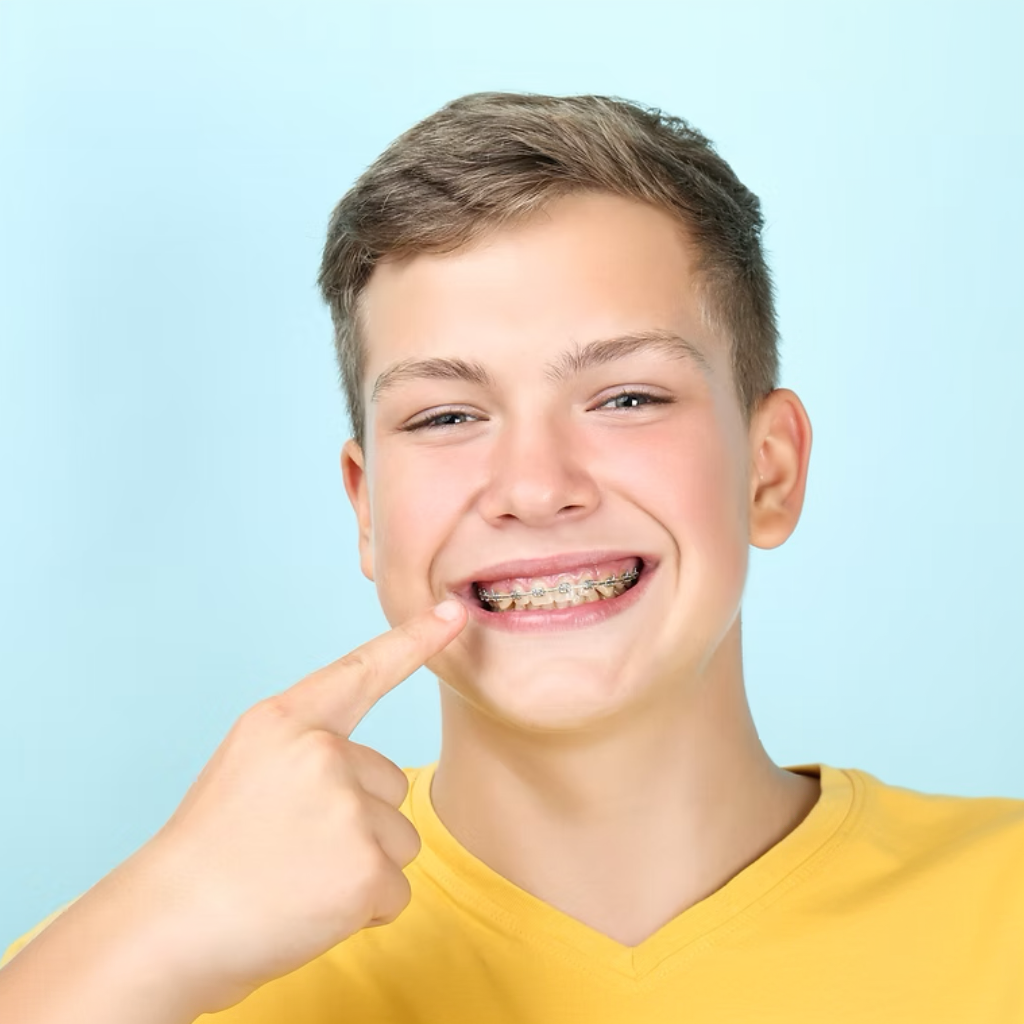


Everything you need to know about life after braces, retainers, and maintaining your orthodontic results.
Medically reviewed by Dr. Jono Gluck, DDS, MSD
QUICK ANSWER
You keep your teeth straight after braces by wearing a retainer and by never fully stopping. Teeth shift throughout adult life whether or not you ever had braces, so retention is permanent maintenance rather than a final step. At Gluck Orthodontics we ask for near full-time retainer wear through the first six months after treatment, then 8 to 10 hours a day, which for most people means overnight. If a retainer no longer snaps into place, never force it. A replacement takes a short digital scan and about a week.
KEY TAKEAWAYS
- Retention is permanent, not a phase. Ligaments and bone keep shifting for life, whether or not you ever wore braces.
- Our protocol is near full-time wear for six months, then 8 to 10 hours a day. That is about five seconds to put in and a minute to clean.
- In a twenty year follow-up, only about 10 percent of patients kept clinically acceptable lower front tooth alignment once retention stopped.
- Never force a retainer that will not seat. Jamming in one that no longer fits can move your teeth the wrong direction.
- If you already stopped, it is not too late. A scan takes minutes, and a short series of clear aligners can usually touch up teeth that drifted.
The braces come off on a Tuesday, and for about a week it feels like the finish line. Then school starts back across Metro Nashville and Williamson County, and the retainer ends up in a napkin on a lunch tray, in a gym bag, or baking in a car outside our Green Hills office.
Dr. Jono completed his orthodontic residency at the University of the Pacific, the program that developed Invisalign in collaboration with Align Technology, training under the system's founding orthodontist. Between our two doctors, we have watched Nashville smiles hold, or fail to hold, for more than forty years.
Here is what that experience keeps confirming. Keeping teeth straight is not about willpower or luck. It is about understanding that teeth never stop moving, and treating your retainer as maintenance rather than a finish line.
How Long Do I Need to Wear a Retainer After Braces?
For life. We ask for near full-time wear through the first six months after treatment, then 8 to 10 hours a day going forward, which for nearly everyone means overnight while sleeping.
The first six months carry the most risk. The bone and ligaments around each tooth are still reorganizing around their new positions, and most of the relapse we see begins in this window.
After that, wear becomes a habit rather than a project. Five seconds to put it in, about a minute to clean it in the morning. Your exact schedule is set at your final braces or aligner appointment, so if you have lost track of what you were told, that is a phone call rather than a guess.
Why Do Teeth Shift Back After Braces?
Teeth have memory, and it is not on your side. Each tooth sits in bone and hangs from elastic ligaments, and both tissues remodel continuously under pressure.
That is exactly what made your treatment possible, and it is also what makes relapse possible. Your face at 45 is not the face you had at 15, and your teeth get the same memo.
This happens whether or not you ever wore braces. Fibers stretched during treatment pull back toward former positions, the jaws keep maturing through adulthood, and daily pressure from lips, cheeks, and tongue keeps nudging.
5 Signs Your Retainer Has Stopped Working
Retainers rarely announce that they have stopped working. They fail quietly, and most patients find out only after their teeth have already moved. Five signs are worth watching for.
1. It no longer snaps into place. You are pushing and pulling to seat one side, and never get that solid, snug click.
2. The plastic has failed. Cracks, warping, or holes mean it is no longer holding its shape.
3. It has gone cloudy and it smells, and cleaning does not fix it. That is degraded plastic, not a hygiene problem.
4. It falls out while you sleep. A retainer only holds the teeth it is actually touching.
5. A bonded retainer has come loose anywhere along the wire, or an end is sticking out. Do not wait on that one.
What If I Already Stopped Wearing Mine?
Come in and let us look. This is one of the most common conversations we have, and it is almost never as bad as patients fear.
If your teeth held their position, a new retainer is all you need. A digital scan takes a couple of minutes and the retainer typically arrives within about a week.
If your teeth have drifted, a short series of clear aligners can usually touch them up before we make the new retainer. That is a far smaller project than going through treatment twice.
Why Nashville Families Choose Gluck Orthodontics for Life After Braces
- Retention planned from day one. We build your retention plan into your treatment plan rather than adding it at the end.
- Two board certified orthodontists. Dr. Joel has been a Diplomate of the American Board of Orthodontics since 1993, and Dr. Jono earned his certification in 2015.
- Aligner training at the source. Dr. Jono trained where Invisalign was developed, which matters when a clear retainer has to fit exactly.
- A replacement plan that removes the excuse. Our Five Year Legendary Retainer Plan covers up to four clear retainers a year at a $50 copay each.
- Digital scanning instead of impressions. A replacement starts with a scan that takes a couple of minutes, not a tray of putty.
- Four decades of follow-up in one community. Serving Nashville since 1983 means we have seen which smiles hold twenty and forty years out.
- More than 1,100 five-star reviews. Families across Green Hills, Belle Meade, Brentwood, and Franklin have shared their experiences with our team.
FINAL ANSWER
You keep your teeth straight after braces by treating your retainer as permanent maintenance. Near full-time wear for six months, then 8 to 10 hours a day, indefinitely. The research on what happens when retention stops is blunt, and the daily cost of continuing is about a minute. If your retainer no longer seats, do not force it and do not give up on it. A scan takes minutes and a new retainer takes about a week, which is a much smaller project than treatment twice.
Frequently Asked Questions
How long do I have to wear my retainer after braces?
For life, realistically. We ask for near full-time wear through your first six months after treatment, then 8 to 10 hours a day, which for most people means overnight while sleeping. Teeth continue shifting throughout adult life, so retention is ongoing maintenance rather than a phase you finish.
What happens if I stop wearing my retainer?
Teeth drift back toward their former positions, usually starting with the lower front teeth. In one twenty year follow-up, only about 10 percent of patients kept clinically acceptable lower front alignment after retention stopped. If your old retainer no longer fits, do not force it.
Which retainer is better, clear or Hawley?
Neither is clearly better for most patients. A randomized one year comparison found no statistically significant difference between them. Clear retainers are less visible and easier to wear consistently. Hawley retainers are more durable and adjustable. Many patients also have a bonded wire behind the lower front teeth.
How do I get a replacement retainer?
You come in for a digital scan that takes a couple of minutes, and the new retainer typically arrives within about a week. Our Five Year Legendary Retainer Plan covers up to four clear retainers a year at a $50 copay each. Bonded and Hawley retainers are not included.
How do I clean my retainer?
Rinse it whenever it comes out, then brush it gently with a soft toothbrush and mild soap. Avoid toothpaste, which scratches the surface. Avoid hot water, boiling, and dishwashers, all of which warp the plastic. Store it in its case whenever it is not in your mouth.
Sources
- Little, R. M., Riedel, R. A., and Artun, J. (1988). An evaluation of changes in mandibular anterior alignment from 10 to 20 years postretention. American Journal of Orthodontics and Dentofacial Orthopedics, 93(5), 423-428. Digital Object Identifier (DOI): 10.1016/0889-5406(88)90102-3. Read full study.
- Little, R. M., Wallen, T. R., and Riedel, R. A. (1981). Stability and relapse of mandibular anterior alignment: first premolar extraction cases treated by traditional edgewise orthodontics. American Journal of Orthodontics, 80(4), 349-365. Read full study.
- Barlin, S., et al. (2011). A retrospective randomized double-blind comparison study of the effectiveness of Hawley versus vacuum-formed retainers. The Angle Orthodontist, 81(3), 404-409. DOI: 10.2319/072610-437.1. Read full study.
Dr. Jono Gluck is a Board Certified orthodontist at Gluck Orthodontics in Nashville, where he practices alongside his father, Dr. Joel Gluck. He answers patient questions about retainers and aligner treatment on the practice's video channel, and sees more retainers that quietly stopped fitting than ones that were deliberately abandoned.
This article provides general educational information about orthodontic retention. Individual orthodontic needs differ, and a personal diagnosis or treatment recommendation requires an examination by a qualified professional. If your retainer no longer fits, contact Gluck Orthodontics rather than forcing it into place.